
Consciousness First

The Hard Problem of consciousness is an idea that still baffles philosophers and scientists. How can conscious subjective experience arise from matter that is not itself conscious?
A non-dualist or idealist would argue that this materialist perspective has it the wrong way around. Consciousness does not arise from inert matter; matter – the material world – is secondary to consciousness. In this view, consciousness is the ‘space’ in which the physical world is perceived. The physical world appears within awareness rather than awareness emerging from it.
In the Gospel of Thomas, Jesus presents a thoroughly consciousness-first model:
“If the flesh came into being because of spirit, it is a wonder. But if spirit came into being because of the body, it is a wonder of wonders. Indeed, I am amazed at how this great wealth has made its home in this poverty.”
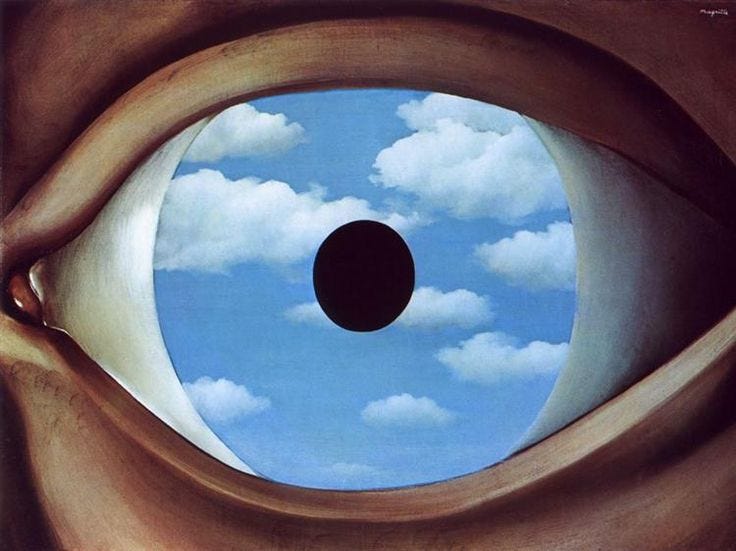
Here, Jesus asks: How could consciousness – this unfathomably incredible thing – arise from something so base, like matter? The structure of the saying is interesting, as if Jesus himself is stunned at the earthly yet wondrous situation in which we find ourselves.
“If the flesh came into being because of spirit, it is a wonder.” Even if spirit (consciousness) is primary and matter emerges from it, this is already mysterious.
“But if spirit came into being because of the body, it is a wonder of wonders.” If it were the other way around – something unconscious giving rise to something conscious – it would be an even greater mystery. This is Jesus’ challenge to the materialist paradigm.
And then comes the final image: “Indeed, I am amazed at how this great wealth has made its home in this poverty.”
Jesus asserts the consciousness-first model but is nonetheless stunned at its majesty; how something as luminous and vast as consciousness can appear through something as limited and fragile as the body.
I hope you enjoyed this piece. If it resonated, please share it with someone who might like it too. Thank you to everyone who reads, likes, comments, subscribes, and supports my work, it truly means a lot. I always appreciate hearing from you in the comments and by email.
This resonates with me, but I think the most interesting part of the “hard problem” discussion often gets missed.
The debate usually becomes: does consciousness arise from matter, or does matter arise from consciousness? But that framing still keeps everything at the level of abstraction.
The line from the Gospel of Thomas — “how this great wealth has made its home in this poverty” — points to something much more experiential.
If consciousness really is primary, then the real question becomes: why would something vast appear through something so limited?
Maybe limitation is exactly the mechanism that makes experience possible.
Without a body there’s no sensation, no emotion, no relationship, no time. Pure consciousness might be infinite, but infinity alone doesn’t create contrast. And without contrast, there’s nothing to actually experience.
So embodiment might not be consciousness trapped in matter. It might be consciousness articulating itself through constraint.
In that sense the “poverty” of the body isn’t a downgrade from spirit — it’s the very thing that allows the “wealth” of consciousness to show up at all.
I wonder if it can’t be conceived as cyclical, paced, rhythmic, versus linear. Borges touched upon this ‘nature of consciousness’ in The Circular Ruins, if you aren’t already familiar with this piece, it’s a great read.