
Jesus the Serpent

The serpent in the Garden of Eden is never identified as the devil. It is described as more ‘crafty’ than any beast created by God. This may lead us to believe that it is an animal incarnation of Lucifer, God’s favourite angel cast from heaven for his prideful ambition. Perhaps it is; or perhaps not. As the story goes, God instructs Adam:
“You may freely eat of every tree of the garden; but of the tree of the knowledge of good and evil you shall not eat, for in the day that you eat of it you shall die.” (Genesis 2:16-17)
The serpent asks, “Did God say, ‘You shall not eat from any tree in the garden’?” Eve replies that they may eat from the trees, except the tree of knowledge, or they will die. The serpent replies:
“You will not die; for God knows that when you eat of it your eyes will be opened, and you will be like God, knowing good and evil.” (Genesis 3:4-5)
Eve sees that the fruit is good for food and pleasing to the eye. She and Adam eat. They do not die, at least not immediately. Instead, God later says:
“See, the man has become like one of us, knowing good and evil…” (Genesis 3:22)
Although death doesn’t occur on the spot, it could be argued that it is introduced to humanity at this moment; prior to eating the fruit, Adam and Eve existed in a state of eternal bliss.
The Gospel of Thomas offers another perspective. I’ve been delving into this text recently, and one section in particular speaks to these points. The Gnostic tradition, of which the Gospel is a part, often flipped the Eden narrative.
In much of the Gnostic tradition, the originator of the material universe is seen as a lesser, often ignorant deity called the Demiurge. This entity is depicted as coming into self-awareness through a flawed creation, needing this creation to (1) perceive itself and (2) evolve. From this view, existence is the story of the imperfect psyche of God undergoing change. It is on this basis that the psychologist Carl Jung wrote Answer to Job. His underlying thesis was that through Job’s terrible suffering, God comes to understand His own nature. In traditional orthodoxy, this is considered deeply heretical.
In the Gospel of Thomas, Saying 39 reads:
“The Pharisees and the scribes have taken the keys of knowledge (gnosis) and hidden them. They themselves have not entered, nor have they allowed to enter those who wish to. You, however, be as wise as serpents and as innocent as doves.”
A version of this saying also appears in the Gospel of Matthew (10:16):
“I am sending you out like sheep among wolves. Therefore be as shrewd as snakes and as innocent as doves.”
The passage in Thomas points to the ‘keys of knowledge’ being an inner awakening – a direct experience of the divine – rather than institutional religion. The argument is that religious authorities hide the inner path and replace it with rules and control. The transcendent is within everyone, yet orthodoxy often positions itself as a gatekeeper.
Could it be that the way we have consumed Christianity for centuries in the West is not at all in line with what its central figure, Jesus, would have wanted? The more I read various versions of the Bible and the exiled gospels, the more I see Jesus’s reality, his insight, his disenchantment with the world and its religions.
I think of Jesus walking into a modern church and looking up at himself, prostrated on two planks above the altar, scanning the congregation and saying: “So you have made an idol of me...” I see him coming up to me, taking the chain and pendant bearing witness to his corpse that I sometimes wear around my neck, holding it in his hand, and gently shaking his head.
Returning to the lines in Thomas, the instruction to ‘be as wise as serpents and innocent as doves’ is fascinating. It suggests using the cunning of the serpent to see through the manipulation of institutions, and aiming for spiritual purity. If this isn’t an anticipation of the importance of integrating the shadow to gain true awareness in a Jungian sense, or the vital power of ‘Hell’ in the Blakeian sense, then I don’t know what is. The darker aspects of existence can be harnessed for wisdom.
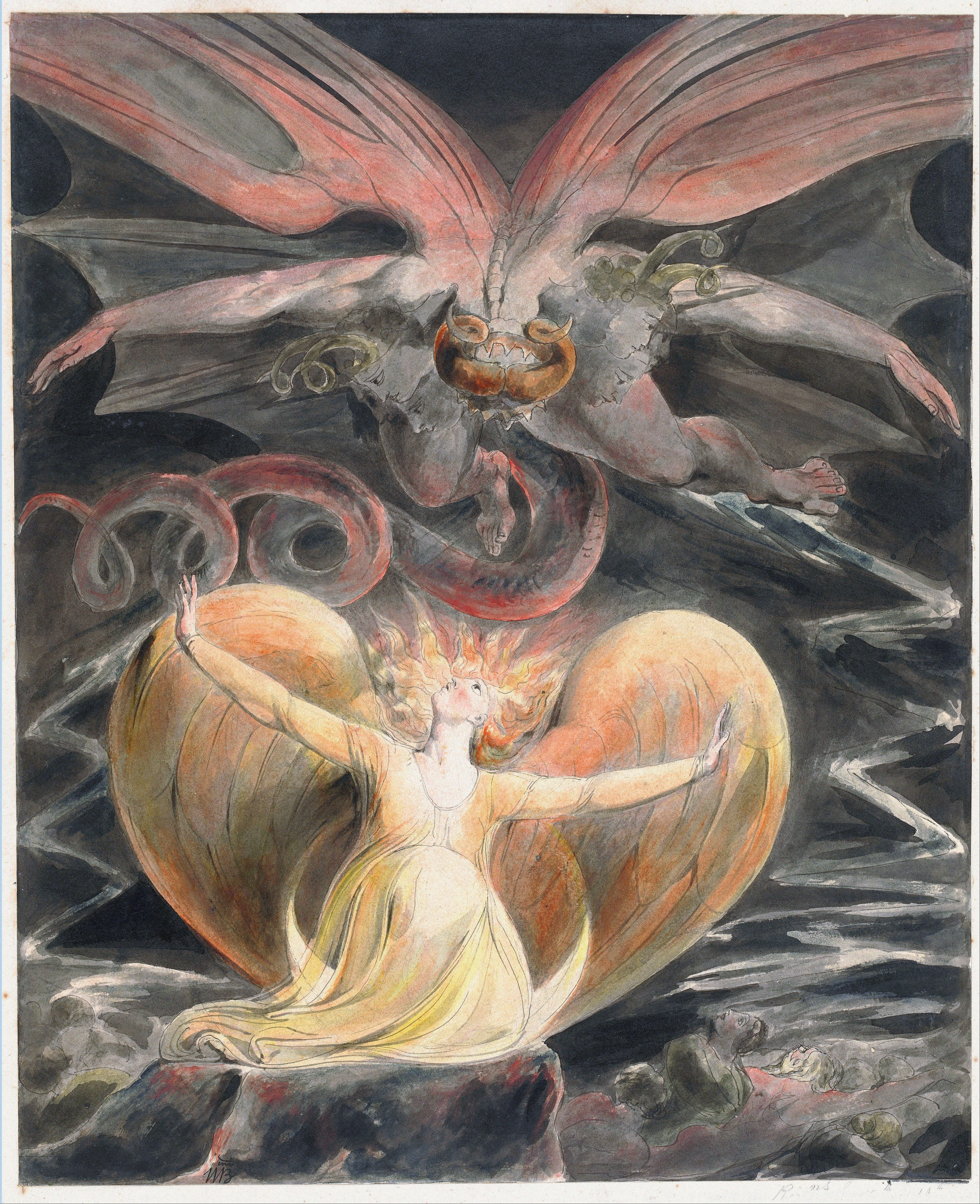
The English poet William Blake believed that so-called dark, ‘hellish’, or ‘negative’ energies were not evil, but rather sources of vitality and liberation. They must be dredged up from the deep, encountered, and transformed in a process of psychic alchemy. “The road of excess leads to the palace of wisdom,” writes Blake in The Marriage of Heaven and Hell.
For Blake, and seemingly for the Jesus of the Gospel of Thomas, conventional religion suppresses such insights. In this context, the serpent in Eden can be seen as bringing vital, passionate, creative energy into an otherwise passive Eden, sparking knowledge and awakening. The serpent becomes the catalyst, and the forbidden fruit is the ‘blasphemous’ knowledge about the Kingdom of Heaven being within each of us.
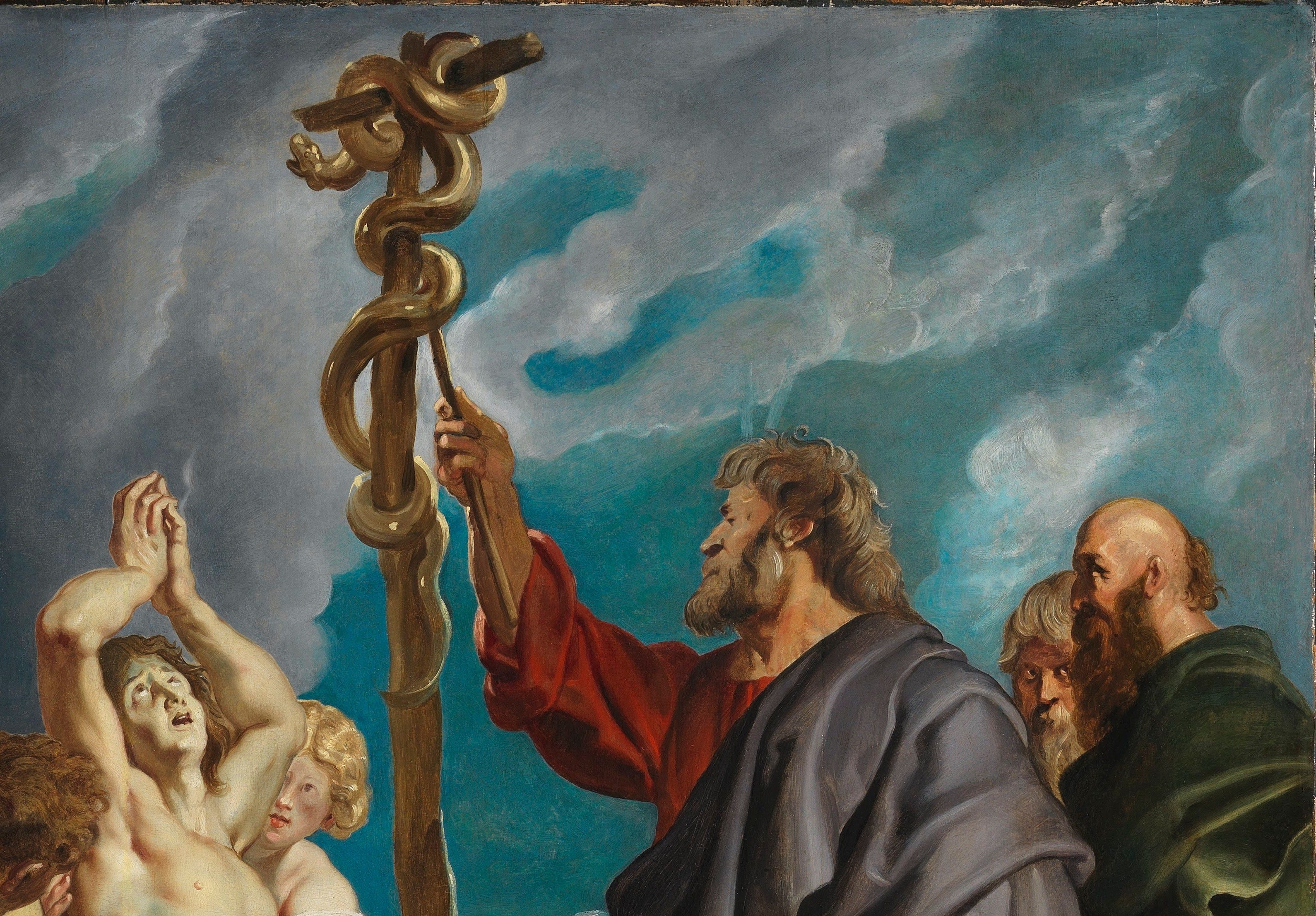
The serpent thus becomes a Christ-like figure. Both provide a forbidden truth that is deeply threatening to the status quo. Even the Gospel of John (3:14) hints at this connection:
“And as Moses lifted up the serpent in the wilderness, even so must the Son of Man be lifted up.”
I have just looked over to the front door of my apartment. My Christ pendant hangs around the handle. I removed it from my neck a couple of weeks ago. How funny, that it should be there, on the doorhandle, inviting me to pass through to a new way of thinking.
I hope you enjoyed this piece. If it resonated, please share it with someone who might like it too. Thank you to everyone who reads, likes, comments, subscribes, and supports my work, it truly means a lot. I always appreciate hearing from you in the comments and by email.
To me, this is the key passage in your essay:
You wrote: “For Blake, and seemingly for the Jesus of the Gospel of Thomas, conventional religion suppresses such insights. In this context, the serpent in Eden can be seen as bringing vital, passionate, creative energy into an otherwise passive Eden, sparking knowledge and awakening. The serpent becomes the catalyst, and the forbidden fruit is the ‘blasphemous’ knowledge about the Kingdom of Heaven being within each of us.“
I never imagined the Garden of Eden fable in such a light, but it does make excellent sense.
You have opened up new Worlds of Blake and Jung. You learn. We share in what you learn. You are a natural teacher. Perhaps you can consider doing a book discussion on The Problem of Job? Bernardo Kastrup, if I am not mistaken, considered that Jung’s finest book and a must-read. Now I am very curious.
Interesting to me also, is your removal of the cross pendant from around your neck two weeks ago. Was there something particularly revelatory in the timing of this event, beyond the symbolic? I like the analogy of it hanging on the door handle as an opening, a portal to new ways of thinking.
My question is, if Christ is within us, why do we need a physical symbol to show others and ourselves that we are trying to be Christlike? Perhaps it was your way and that of others to witness, or silently proclaim the gospel and your faith in the words of Jesus?
The cross may be seen symbolically too... the death of the ego on the cross of matter. But your article has pushed a deeper thought. We can look at God and Demiurge as external forces... the good and evil... the either/or... I am good/they are bad when both reside within. The Demiurge is blinded to God, believes himself God, cannot perceive the greatness of God... but as you make the point, can be viewed as the unformed psyche within. Is that not familiar in our world? We constantly fall into the trap that there is nothing higher than ourselves. We worship science and false idols. We make gurus and geneticists. We trip over our own hubris to meet our nemesis. The path to Hell etc.. We are not wise enough, nor innocent enough. Dare we admit it is we, like the Demiurge, who are blinkered and arrogant and so we suffer interminably? Maybe that it is the individual and collective shadow that we must see first to make the crucifix-guarded threshold worth crossing.